Op-ed, Commercialization
Why Indian Institutions Must Measure Success in Companies, Not Rankings !
While Indian institutes like IIT Kanpur are setting historic records by raising billion-dollar endowments, the true measure of success lies in converting academic research into commercial reality rather than merely erecting buildings and chasing rankings.

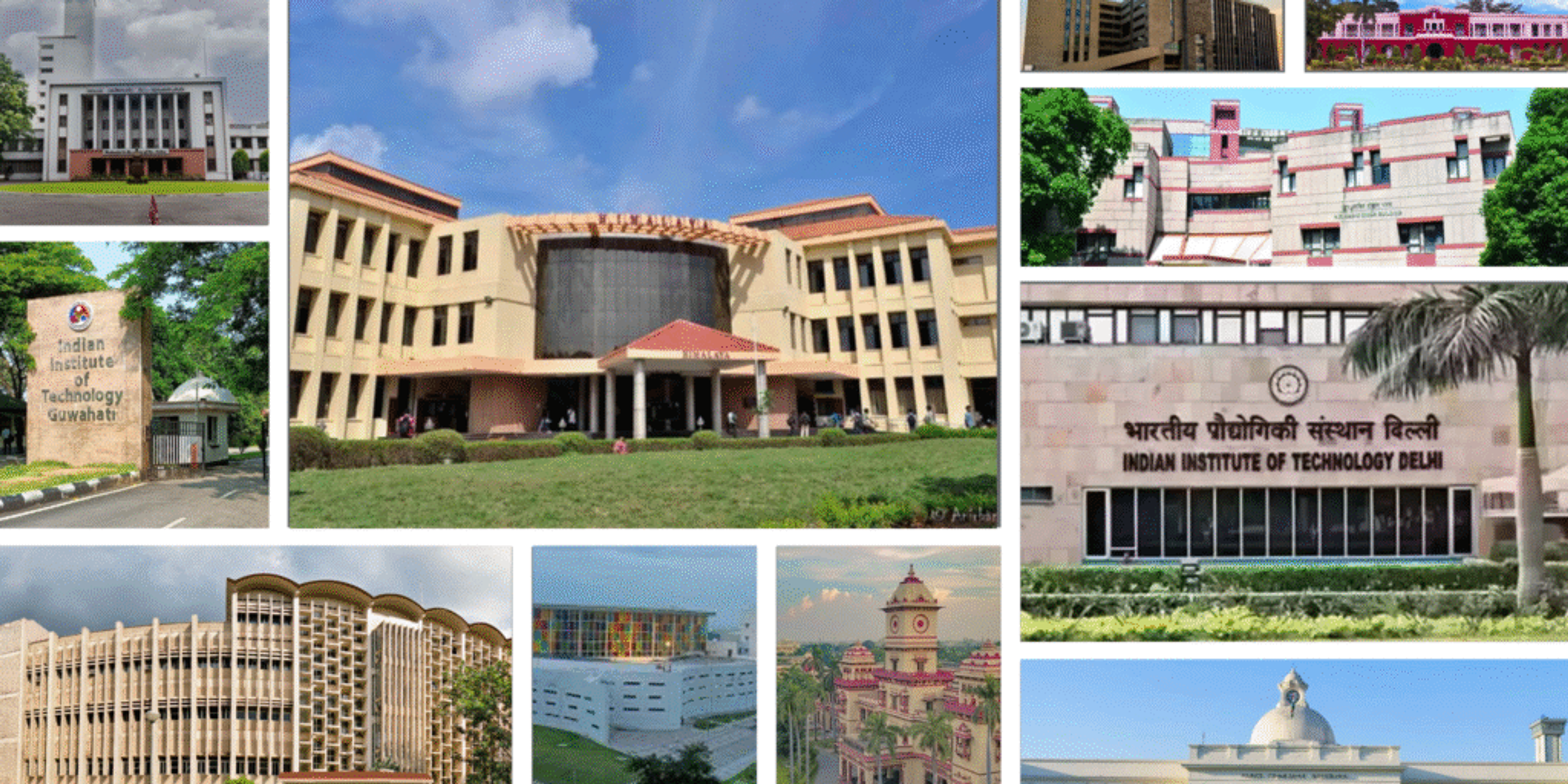
On 14 October, at Bharat Mandapam in New Delhi, Defence Minister Rajnath Singh launched IIT Kanpur's "Greater Than Us" campaign. The target is $1 billion, roughly ₹9,000 crore, by March 2029. The institute calls it the largest fundraising campaign ever undertaken by an IIT. Before the launch, ₹4,155 crore had already been committed by alumni, donors, companies and government, nearly half the goal.
For five years, from 2019 to 2024, I led IIT Kanpur's Startup Incubation and Innovation Centre (SIIC), so this campaign feels personal. In that time the incubator crossed 300 startups. Put simply, before the institute asked the world for a billion dollars, its startups had already created one.
That is the point I want to make. Indian institutions have finally started to dream in billions, and that is welcome. But the real prize is the trillion-dollar economic value sitting in our labs. A world-class incubator is the engine that turns campus money into that value. So every rupee raised should be judged by what it converts into products, companies and jobs, not by buildings and rankings.
The campuses are waking up
IIT Kanpur is not alone. On 26 September, IIT Madras, its Research Park and Unicorn India Ventures announced a ₹450 crore first close of the IITM Unicorn Frontier Fund I, aiming for ₹1,000 crore. It has already backed four deep-tech startups, from a rocket-engine maker to a carbon-capture company. In December 2025, IIT Bombay's incubator SINE launched a ₹250 crore fund for pre-seed and seed deep-tech companies. At IIT Delhi, the Class of 2000 pledged more than ₹70 crore at its silver jubilee, the largest commitment by a single batch in the institute's history.
The design of the Kanpur campaign is worth reading closely. Its "Frontier" pillar has already raised ₹1,556 crore against an initial goal of ₹1,000 crore. It will fund centres for quantum technology, semiconductor packaging and medical device testing. There is a ₹524 crore Central Research Facility with shared equipment, including a semiconductor processing centre and an AI computing facility. A ₹180 crore gift from alumnus Rahul Gautam creates a School of Innovation and Entrepreneurship in Noida, opening in July 2027. The institute is also working with the Ministry of Defence on a drone hub to make components India still imports.
This is a shift in posture. For decades, our best institutions asked the state for budgets. Now they are asking their alumni, industry and society to co-own a mission.
Where the trillion dollars is
Why do I say trillion? Look at what research universities do elsewhere. A 2015 MIT study found that companies founded by its alumni were generating about $1.9 trillion in annual revenue and employing around 4.6 million people. In the United States, a BIO and AUTM study estimated that licensing of university and non-profit inventions contributed up to $1 trillion to GDP between 1996 and 2020, and supported up to 6.5 million jobs.
None of that came from endowments alone. Harvard's endowment stood at $56.9 billion in fiscal 2025, more than fifty times IIT Kanpur's entire campaign. Yet the economic value created by American universities is far larger than any endowment. The engine is translation: the machinery that turns a paper into a patent, a patent into a prototype, and a prototype into a company that a customer pays.
India already has the raw material. Our IIT alumni have built and led some of the world's most valuable technology companies, mostly abroad. Our labs publish in frontier areas such as quantum, semiconductors and medical devices. What we have lacked is the middle of the pipeline. The Kanpur campaign itself notes that India imports about 80% of its high-end medical devices. That single gap is a market waiting for Indian labs to serve.
What a billion should buy
Here is the simple test I would apply to any campus fund: does the money shorten the distance between a lab and a customer?
Shared prototyping and testing facilities pass that test, because a startup cannot afford a semiconductor line or a medical device testing lab on its own. Patient early-stage capital, like the funds at IIT Madras and IIT Bombay, passes it too, because deep-tech companies often take longer to reach the market than most venture funds are built to wait. Schools that teach researchers to become founders pass it.
A beautiful new building with no translation mandate does not pass it. Nor does a research centre measured only by papers.
The incubator is the engine, not the annexe
On many campuses, the incubator is treated as an annexe: a few rooms near the main gate, a small grant and a stretched team. My years at SIIC, IIT Kanpur and now at FITT, IIT Delhi convinced me it should be the opposite. A world-class incubator is the campus's front door to the market. It is where a professor's lab, a student's idea, an alumnus's cheque and an industry buyer's problem finally meet.
Three lessons stayed with me. First, mission-anchored hubs attract the right founders. At IIT Delhi we run programs such as Unnati AI (with Microsoft) or SUGAM (with Natwest) or Samsung Solve for Tomorrow. . A clear mission brought in startups, government users and industry partners who knew exactly why they were there.
Second, founders rarely failed for want of ideas. They struggled at three moments: when they needed expensive equipment, when they needed a first paying customer, and when they needed help with IP licensing, regulation or public procurement. An incubator that solves those three problems quickly is worth more than any new building.
Third, the incubator turns alumni goodwill into lasting economic value. A donation spent on operations is used once. A donation that becomes seed capital, mentoring and market access for startups can compound for decades. That is why major incubators (FITT, SIIC or SINE), which has now supported thousands of startups, matters as much to this campaign as any new laboratory.
If I were advising any campus raising a billion dollars, I would make the incubator core infrastructure, not a line item. Give it its own fund, direct access to the shared research facilities, and a professional team that can negotiate licences and contracts. Give it a seat at the table when the institute signs strategic partnerships. The new School of Innovation and Entrepreneurship and the planned drone hub will be far more powerful if they are wired into the incubator from day one.
The fair objection
Critics will raise two reasonable concerns. First, money raised is not money converted. Indian institutions have announced big centres before that produced reports rather than products. Second, philanthropy concentrates at the top. A handful of IITs with wealthy alumni will pull further ahead, while state universities and tier-2 colleges, where most Indian students study, are left behind.
Both concerns are valid, and both have answers. The first is solved by accountability. IIT Kanpur's director, Manindra Agrawal, has said every financial commitment will support a specific school, facility, position or programme. That is the right instinct. The next step is to publish translation outcomes alongside fundraising totals: licences signed, startups formed, products shipped and revenue earned. The second is solved by sharing. A Central Research Facility with open access can serve startups and researchers from nearby colleges, not just its own campus. The leading IITs should act as hubs that lift the regions around them, not as islands.
What should happen next
- Institutions: Treat the incubator as core infrastructure, with its own fund and access to shared facilities. Report translation metrics every year next to money raised. Give tech transfer offices real authority and fast timelines for licensing, and make faculty entrepreneurship, through leave and equity, a normal career path.
- Government: Consider matching grants or better tax treatment for endowment giving to research and translation. Let schemes like the ₹1 lakh crore Research, Development and Innovation Scheme work with campus-linked funds that already have a deal flow.
- Industry and alumni: Give more than money. Become first customers, pilot partners and mentors for campus startups, especially in defence, health and semiconductors, where buyers decide who survives.
- The wider ecosystem: Open premium IIT facilities to state universities and tier-2 startups through shared-access models, so the dream does not stop at the campus gate.
IIT Kanpur has shown that an Indian institution can ask for a billion dollars and expect to get it. That is a milestone. But the question for the next decade is bigger: can our campuses build the kind of companies that add up to a trillion? The answer will not be found in how much we raise. It will be found in what we dare to translate.